Category: Advice

  • Community Perks

    Community Perks

    How We Support You Beyond the Dome

    At HeroX, we believe in providing more than just an air dome—we offer a complete community experience to help you operate, maintain, and maximize the value of your investment. From exclusive perks to expert guidance, we ensure your air dome project runs smoothly every step of the way.

    ‍

    Perks Before You Buy (All Free with Your Dome Purchase!)

    We offer these complimentary services to help you plan and visualize your dome project before making a purchase:

    1. Book a Virtual Meeting – Complimentary Schedule a one-on-one consultation with our experts to discuss your dome, ask questions, and explore customization options.
    2. Visit One of Our Domes – Complimentary ️ Attend a monthly site visit to experience a HeroX dome in action and gain firsthand insights into its functionality and quality.
    3. Get a Custom Dome Sketch ✏️ Receive a concept sketch based on your project specifications to help visualize the setup.
    4. Receive 3D Renders of Your Future Dome See high-quality 3D renders of your dome to help with planning and presentation.
    5. Experience a Virtual Tour of Your Dome Step inside your dome before it’s built with a fully interactive virtual tour.
    6. On-Site Technician Visit Have an expert assess your site, discuss foundation options, and ensure seamless installation.
    7. Introduction to Dome Consultants Need professional project management? We connect you with TheDomeConsultant.com, experts in air dome planning and execution.

    Introduction to 3rd-Party Suppliers Save on project costs by gaining access to trusted suppliers for turf, flooring, lighting, and other essential accessories.

    ‍

    Community Perks After You Buy

    When you purchase an air dome from us, you gain access to exclusive benefits designed to assist with operation, maintenance, and business growth:

    1. Priority Customer Support: Direct access to priority support for urgent inquiries and troubleshooting.
    2. ‍Dome Maintenance Package: Seasonal maintenance checklist and discounted technician visits to keep your dome in top shape.‍
    3. Energy Efficiency Consultation: Expert advice on reducing operational costs and optimizing HVAC efficiency.‍
    4. Discounts on Upgrades & Accessories: 10-20% off on lighting, flooring, turf, and other dome enhancements.‍
    5. Marketing Assistance for Dome Operators: Free promotional listing on our website and a feature on HeroX social media.‍
    6. Referral Bonus Program: Earn cash incentives or future purchase discounts for referring new clients.‍
    7. Exclusive Industry Networking Events: Invitations to private events connecting you with sports clubs, investors, and suppliers.

    ‍

    We’re Here to Support You

    At HeroX, we are committed to being flexible, responsive, and involved in your dome project. Whether you need assistance with design, project management, or cost-saving solutions, we’re here to help.

    Let’s bring your air dome project to life! Get started today!

    (702) 919-7179

    ✉️ office@heroxairdomes.com
  • Cost of an Air Dome

    Cost of an Air Dome

    Generally prices range:

    United States between 10 to 50 dollars per square feet.

    Europe between 50 to 250 euros per square meter.

    The prices are significantly different between markets due to the different standards for fire safety, energy source, inflation systems and HVAC.

    Dome Installation Cost and Timeline:

    • Installation: Requires a supervisory team, laborers, heavy equipment, electrician, and HVAC technician. Small domes can be installed in 1-2 days, larger ones may take weeks. Installation cost depends on time and resources used.
    • Design and Engineering: Structural and mechanical engineering typically costs around $20,000, depending on local codes and requirements.
    • Foundation: Cost varies based on soil conditions and local codes. Example: Hybrid foundation for a 100,000 sq.ft. dome in Michigan may cost $350,000.
    • Ongoing Expenses: Utility costs range from $0.50 – $1.50 per sq.ft. annually. Minimal maintenance required.
    • Safety: HeroX domes prioritize safety with strong materials and engineering. We typically use Ferarri or Sattler fabrics.

    Project Roles:

    • HeroX: Provides dome components and consultation.
    • Engineers: Structural and mechanical engineers procured by our consultants, others by the buyer.
    • Installation Team: Installs dome components; manual labor required.
    • Architect, Contractor, Electrician, HVAC Technician: Procured by the buyer for site work, permits, and installation.
    • Dome Operator/Maintenance Team: Procured by buyer for ongoing operation and maintenance.

    Purchase Process:

    1. Scope Discussion: Determine dome size, use, occupancy, timeline, and funding options.
    2. Design and Engineering: Full engineering determines dome package scope and cost.
    3. Production and Site Work: Dome production begins while site work commences.
    4. Transportation: Dome and components transported to installation site.
    5. Installation: Completed by expert installers, timeline varies based on dome size and complexity.

    By understanding these aspects, you can plan and budget effectively for your dome project. Start by getting an instant estimate through our air dome configurator and get connected with our team.

    ‍

  • Custom Branding

    Custom Branding

    We have many ways we can personalise your dome:
    • Custom Fabric Colors
    • Logo Banner
    • High Resolution Photo Banner
    • Skylights

    Below are a few examples:

  • Financing

    Financing

    Financing Your Air Dome with HeroX: Flexible Options for Businesses and Individuals

    Investing in an air dome is a significant step towards enhancing your sports facility, business, or community space. At HeroX Air Domes, we understand that financing such a project can be a challenge. That’s why we have partnered with three trusted financing providers to help businesses and individuals secure the funding they need.

    For businesses looking to finance their air dome, we offer two reliable financing solutions:

    1. Global Business Financing with Grenke Leasing

    Grenke Leasing provides tailored leasing and financing solutions for businesses across the USA, ensuring you can acquire your air dome with flexible payment terms.

    Grenke Leasing IL LLC – Chicago

    Coverage Area: Central, North & South East USAAddress:1100 Lake Street, Oak Park, Illinois 60301 Contact Details:

    ‍

    Phone: +1 708 443 1170
    Email: service.il@grenke.us
    Web: www.grenke.us

    GC Leasing AZ LLC – Phoenix

    Coverage Area: Middle West, North & South West USA
    Address:
    3200 E Camelback Road #253, Phoenix, Arizona 85018
    Contact Details:
    Phone: +1 602 515 8057
    Email: service.az@grenke.us
    Web: www.grenke.us

    ‍

    2. U.S.-Based Business Financing with LED.Finance

    For businesses operating within the United States, LED.Finance provides specialized financing options tailored to your project’s needs.

    Contact:
    Ross Reida
    Managing Partner
    LED.Finance, LLC
    Phone: (503) 807-2141
    Web: www.ledfinance.com

    Personal Financing for Individuals

    For individuals seeking financing up to $100,000 for their air dome project in the U.S., we have partnered with Feeasy®.

    Contact:S.A. MoskowitzChairmanFeeasy®

    Address:

    29 Valley Drive, Suite 4483, Greenwich, CT 06830

    Phone: 646-770-1456

    Email: samoskowitz@itsfeeasy.com

    ‍

    Why Finance Your Air Dome?

    If you’re considering financing your air dome project, reach out to our trusted partners today or contact us at HeroX Air Domes for further assistance!

  • Air Supported vs Permanent Structures

    Air Supported vs Permanent Structures

    For those planning the infrastructure of tennis centers, the choice between air supported and permanent structures is critical. Here we explore the advantages of air supported structures, positioning them as a strategic and often preferable alternative to their permanent counterparts.

    Capital Cost

    Air Supported Structures: These structures stand out for their cost-efficiency. The investment required is less daunting, dependent on the size of the facility, and the selection of liner and equipment, making them a budget-friendly option.

    Permanent Structures: In contrast, constructing a permanent facility demands a higher initial capital outlay, influenced by the facility’s size, design complexity, and the quality of building materials.

    Operating Cost

    Air Supported Structures: Despite potentially higher utility costs per usage hour, the seasonal nature of these structures—typically active for 5 to 6 months—can mean overall lower operating costs annually.

    Permanent Structures: Permanent facilities incur significant operating expenses year-round, including staffing and utilities, which can add up over the facility’s continuous 12-month operation.

    Seasonal Implications

    Air Supported Structures: These structures excel in seasonal adaptability, offering covered courts in winter and converting to outdoor courts in summer, ensuring year-round utility and maximized investment.

    Permanent Structures: They may be preferred during winter but often face programming and utilization challenges in the summer, leading to potential inefficiency.

    Life Cycle

    Air Supported Structures: The bubble fabric of these structures is robust, with a life span of 15 to 20 years, reliant on diligent maintenance and UV protection measures.

    Permanent Structures: While they have a longer estimated life span of 25 to 35 years, the extended life comes with sustained maintenance and operational costs.

    Consumer Opinions

    Air Supported Structures: Players endorse the seasonal outdoor play option and often report a more enjoyable playing experience, citing better air quality and temperature control compared to permanent structures.

    Permanent Structures: Although they offer a stable environment, the lack of seasonal open-air play can be a downside for some consumers.

    Operating Considerations

    Air Supported Structures: They are lauded for their flexibility but are sometimes limited by codes that prevent use as general gathering places, slightly narrowing program diversity.

    Permanent Structures: These require intensive scheduling efforts to remain active during off-peak seasons, which can be a logistical challenge.

    In sum, air supported structures often present a superior option for tennis centers, particularly when considering budget constraints, seasonal versatility, and consumer satisfaction. They provide a strategic and adaptable solution that can be tailored to the specific needs of a community or organization, making them an increasingly popular choice in the planning of recreational facilities.

  • Free Structure for Tennis Clubs: How to Get It?

    Free Structure for Tennis Clubs: How to Get It?

    Get a free quote here.

    ‍

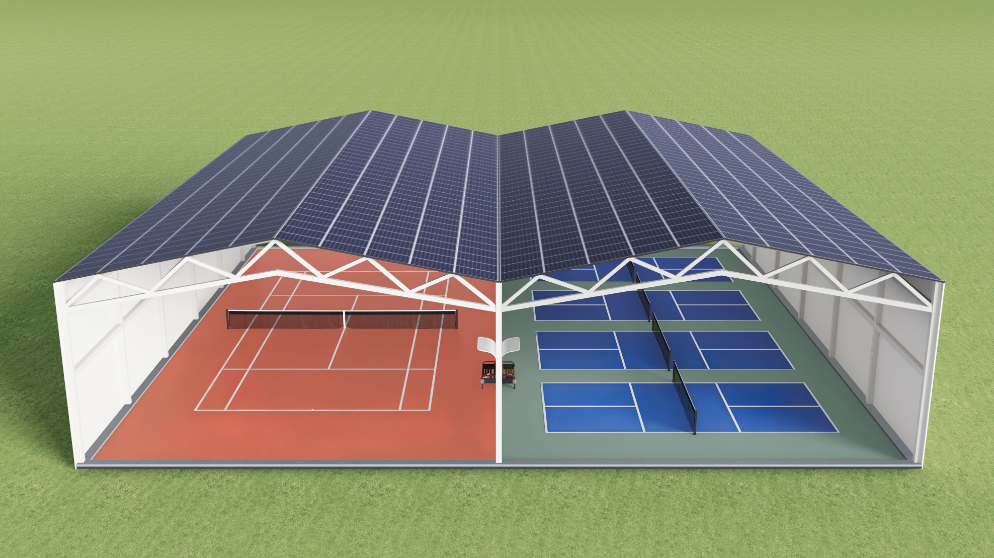
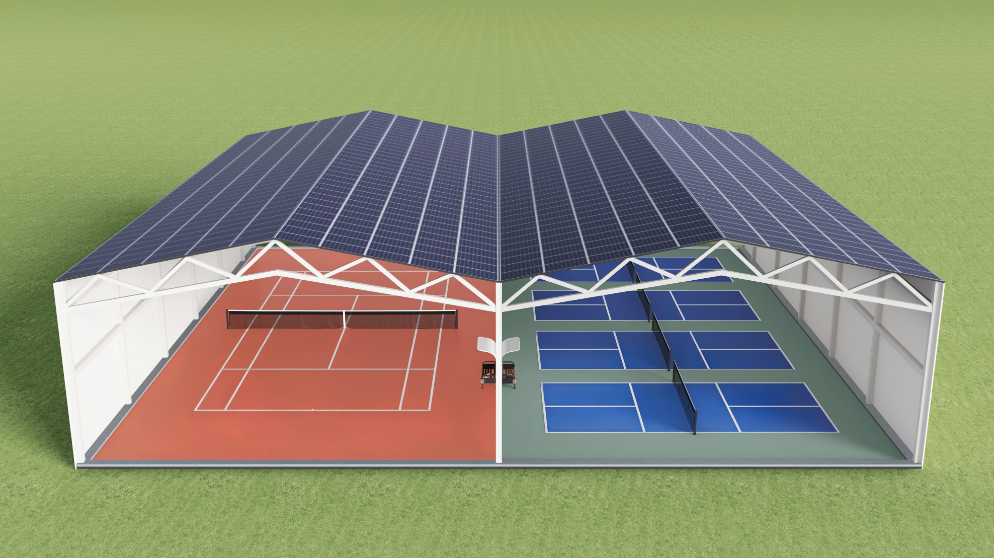
    Installing photovoltaic solar panels on building roofs is highly practical, offering a unique production method that requires no labor. The true advantage of photovoltaic technology is the possibility of having a photovoltaic structure built for free through a straightforward financing system. By financing the structure and solar panels over a longer period (10+ years), the energy produced either for your use or sold to the grid can exceed the monthly payment costs, effectively providing a no-cost solution to generate additional revenue for your club.

    This article provides all the necessary information about photovoltaic structures and their financing:

    __wf_reserved_inherit

    (1) What is a Photovoltaic Structure?

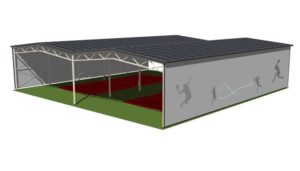
    A photovoltaic structure is a covered building, typically 60 x 120 ft or 7,200 sq ft, equipped with solar panels that generate electricity. This renewable, non-polluting energy can be consumed or sold, allowing you to further develop your activities.

    (2) How Much Does a Photovoltaic Structure Cost?

    The cost of a turnkey photovoltaic structure varies depending on the type of structure, financing conditions, connection costs, and the level of customization. On average, a 60 x 120 ft structure costs around $500,000 USD.

    Other Requirements:

    • Proximity to the Electrical Grid: Your photovoltaic structure must be near the electrical grid, either a transformer or a 20,000 V line (3 wires) if you plan to feed electricity into the grid. We have an AI tool that can help determine this.
    • Optimal Exposure: A southern orientation is ideal, but roofs facing East or West can also be profitable, depending on the region.
    • No Shadows: Ensure there are no buildings, trees, or other elements that could cast shadows on the roof.
    __wf_reserved_inherit

    (3) How to Build a Photovoltaic Structure Without Any Money Out of Pocket

    1. Get a detailed estimate from us for the structure.
    2. Apply for financing.
    3. Get financing approval.
    4. Order the structure and panels.
    5. Get the structure installed.
    6. Connect the solar panels to the grid.
    7. Get paid for the electricity produced or consume it yourself.
    __wf_reserved_inherit

    (4) How Does the Structure Become Free?

    Although a photovoltaic structure requires an initial investment, it can often be financed with zero down payment over seven years or longer. The income from selling electricity or from self-consumption typically covers the payment plan, making the structure virtually cost-free.

    Self-Financing Explained:

    1. Invest in a photovoltaic structure; once operational, you own and manage the electricity production and the building.
    2. Earn income from the sale or self-consumption of the electricity produced.
    __wf_reserved_inherit

    (5) The No-Cost Photovoltaic Structure for Tennis Clubs

    If a free photovoltaic structure meets your club’s needs, let’s discuss the potential collaboration. Choosing a free photovoltaic structure is a simple, quick, and effective way to maximize ROI for your tennis club. However, ensure your project is profitable before proceeding. For a quick and sustainable start, HeroX offers free, no-obligation consultations to guide you through the process. Click the link here to schedule a meeting.

  • 300+ Facility Funding Resources

    300+ Facility Funding Resources

    Here are 6 tips to finance and fundraise for sports facilities:

    1. Explore Private Financing: Seek financing options from banks, credit unions, or manufacturers/suppliers in the sports construction industry that offer installment plans.
    2. Consider Public-Private Partnerships: Partner with public or private entities to share costs and resources, such as schools and private universities or corporate entities.
    3. Organize Fundraising Campaigns: Form a dedicated committee involving stakeholders, parents, and local representatives. Regular meetings and professional fundraising help can enhance success.
    4. Sell Sponsorships: Generate revenue by selling sponsorships like naming rights or advertising packages, offering recognition to donors.
    5. Sublet Facility Usage: Rent out the facility to other clubs or groups to generate revenue and offset construction costs.
    6. Collect Donations: Engage with booster clubs, alumni, and local community members through targeted campaigns, events, and support associations.

    Remember to:

    • Maintain Public Relations: Keep the community informed through websites, social media, and real-world events.
    • Encourage In-Kind Donations: Seek support from local craftsmen or suppliers for material donations or unpaid labor.
    • Get Cost Estimates Early: Understand project costs upfront to plan fundraising effectively and bridge funding gaps.

    300+ Funding Resources:

    Click here to access the full document.

    Now go visit our air dome configurator to get an instant estimate for your future air dome.

    ‍

  • Air Supported vs Permanent Structures

    Air Supported vs Permanent Structures

    For those planning the infrastructure of tennis centers, the choice between air supported and permanent structures is critical. Here we explore the advantages of air supported structures, positioning them as a strategic and often preferable alternative to their permanent counterparts.

    Capital Cost

    Air Supported Structures: These structures stand out for their cost-efficiency. The investment required is less daunting, dependent on the size of the facility, and the selection of liner and equipment, making them a budget-friendly option.

    Permanent Structures: In contrast, constructing a permanent facility demands a higher initial capital outlay, influenced by the facility’s size, design complexity, and the quality of building materials.

    Operating Cost

    Air Supported Structures: Despite potentially higher utility costs per usage hour, the seasonal nature of these structures—typically active for 5 to 6 months—can mean overall lower operating costs annually.

    Permanent Structures: Permanent facilities incur significant operating expenses year-round, including staffing and utilities, which can add up over the facility’s continuous 12-month operation.

    Seasonal Implications

    Air Supported Structures: These structures excel in seasonal adaptability, offering covered courts in winter and converting to outdoor courts in summer, ensuring year-round utility and maximized investment.

    Permanent Structures: They may be preferred during winter but often face programming and utilization challenges in the summer, leading to potential inefficiency.

    Life Cycle

    Air Supported Structures: The bubble fabric of these structures is robust, with a life span of 15 to 20 years, reliant on diligent maintenance and UV protection measures.

    Permanent Structures: While they have a longer estimated life span of 25 to 35 years, the extended life comes with sustained maintenance and operational costs.

    Consumer Opinions

    Air Supported Structures: Players endorse the seasonal outdoor play option and often report a more enjoyable playing experience, citing better air quality and temperature control compared to permanent structures.

    Permanent Structures: Although they offer a stable environment, the lack of seasonal open-air play can be a downside for some consumers.

    Operating Considerations

    Air Supported Structures: They are lauded for their flexibility but are sometimes limited by codes that prevent use as general gathering places, slightly narrowing program diversity.

    Permanent Structures: These require intensive scheduling efforts to remain active during off-peak seasons, which can be a logistical challenge.

    In sum, air supported structures often present a superior option for tennis centers, particularly when considering budget constraints, seasonal versatility, and consumer satisfaction. They provide a strategic and adaptable solution that can be tailored to the specific needs of a community or organization, making them an increasingly popular choice in the planning of recreational facilities.

  • Free Structure for Tennis Clubs: How to Get It?

    Free Structure for Tennis Clubs: How to Get It?

    Get a free quote here.

    ‍

    Installing photovoltaic solar panels on building roofs is highly practical, offering a unique production method that requires no labor. The true advantage of photovoltaic technology is the possibility of having a photovoltaic structure built for free through a straightforward financing system. By financing the structure and solar panels over a longer period (10+ years), the energy produced either for your use or sold to the grid can exceed the monthly payment costs, effectively providing a no-cost solution to generate additional revenue for your club.

    This article provides all the necessary information about photovoltaic structures and their financing:

    __wf_reserved_inherit

    (1) What is a Photovoltaic Structure?

    A photovoltaic structure is a covered building, typically 60 x 120 ft or 7,200 sq ft, equipped with solar panels that generate electricity. This renewable, non-polluting energy can be consumed or sold, allowing you to further develop your activities.

    (2) How Much Does a Photovoltaic Structure Cost?

    The cost of a turnkey photovoltaic structure varies depending on the type of structure, financing conditions, connection costs, and the level of customization. On average, a 60 x 120 ft structure costs around $500,000 USD.

    Other Requirements:

    • Proximity to the Electrical Grid: Your photovoltaic structure must be near the electrical grid, either a transformer or a 20,000 V line (3 wires) if you plan to feed electricity into the grid. We have an AI tool that can help determine this.
    • Optimal Exposure: A southern orientation is ideal, but roofs facing East or West can also be profitable, depending on the region.
    • No Shadows: Ensure there are no buildings, trees, or other elements that could cast shadows on the roof.
    __wf_reserved_inherit

    (3) How to Build a Photovoltaic Structure Without Any Money Out of Pocket

    1. Get a detailed estimate from us for the structure.
    2. Apply for financing.
    3. Get financing approval.
    4. Order the structure and panels.
    5. Get the structure installed.
    6. Connect the solar panels to the grid.
    7. Get paid for the electricity produced or consume it yourself.
    __wf_reserved_inherit

    (4) How Does the Structure Become Free?

    Although a photovoltaic structure requires an initial investment, it can often be financed with zero down payment over seven years or longer. The income from selling electricity or from self-consumption typically covers the payment plan, making the structure virtually cost-free.

    Self-Financing Explained:

    1. Invest in a photovoltaic structure; once operational, you own and manage the electricity production and the building.
    2. Earn income from the sale or self-consumption of the electricity produced.
    __wf_reserved_inherit

    (5) The No-Cost Photovoltaic Structure for Tennis Clubs

    If a free photovoltaic structure meets your club’s needs, let’s discuss the potential collaboration. Choosing a free photovoltaic structure is a simple, quick, and effective way to maximize ROI for your tennis club. However, ensure your project is profitable before proceeding. For a quick and sustainable start, HeroX offers free, no-obligation consultations to guide you through the process. Click the link here to schedule a meeting.

  • 4 Popular Air Dome Upgrades

    4 Popular Air Dome Upgrades

    Air domes, widely used for sports facilities, storage spaces, and more, offer unique opportunities for enhancement. While they primarily serve a functional purpose, there’s increasing interest in improving their aesthetic and operational aspects. Here are four popular upgrades for air domes that balance both form and function.

    1. Installing Skylights: Natural lighting is a game-changer for air domes. Skylights not only reduce reliance on artificial lighting during the day but also create a more pleasant, inviting interior atmosphere. They can be strategically placed to maximize daylight exposure while adding an architectural element to the dome’s appearance.
    2. Higher Energy Efficiency Membrane: Upgrading to a more energy-efficient membrane is both an environmentally conscious and cost-effective move. Newer materials offer better insulation, reducing heating and cooling costs. These membranes are not only functional but can also be designed in various colors and patterns to enhance the dome’s external appearance.
    3. Transition from Tunnel to Revolving Doors: Replacing traditional tunnel doors with revolving doors can significantly improve an air dome’s energy management. Revolving doors minimize the loss of heated or cooled air, maintaining a consistent internal climate. This upgrade is particularly beneficial for domes in regions with extreme weather conditions.
    4. Integrating Smart Capabilities: Modern technology allows for the integration of smart systems into air domes. These can include automated climate control, lighting systems, and even security features. Smart capabilities provide a higher level of control and efficiency, making it easier to manage the dome’s environment and security.

    Each of these upgrades not only enhances the functionality of an air dome but also contributes to its aesthetic appeal and operational efficiency. As with any significant investment, it’s essential to consult with specialists to determine the best options for your specific needs and goals.

    ‍