Tag: inflatable dome

  • The Definitive Inflatable Dome Buying Guide (2026)

    The Definitive Inflatable Dome Buying Guide (2026)

    After designing and delivering air-supported structures across 20 countries, I can tell you that most buyers walk in asking the wrong questions – this guide (Inflatable dome buying guide) is built on everything I wish they had read first.

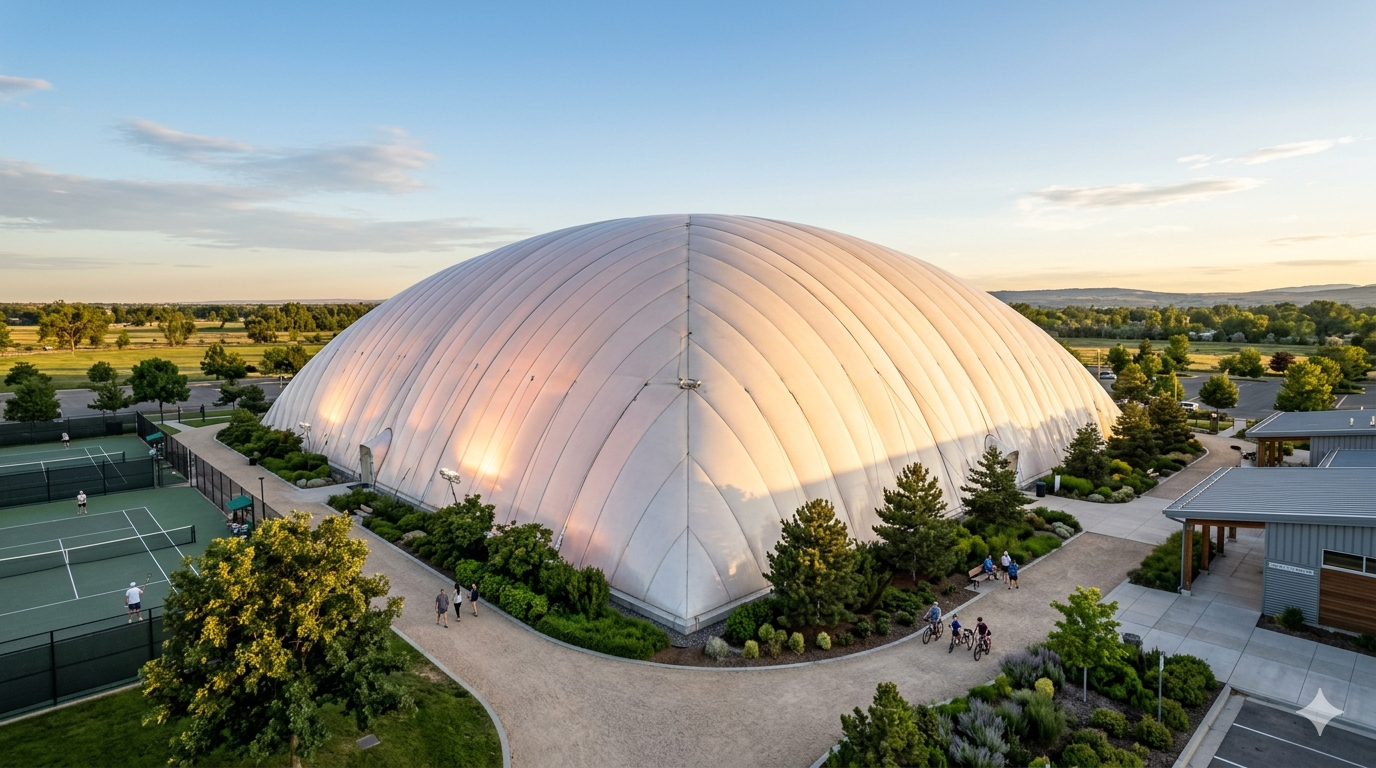
    Inflatable domes — also called air-supported structures, sports bubbles, or air domes — are large-span fabric enclosures held up entirely by slightly pressurised air. They are the fastest and most cost-effective way to create climate-controlled, column-free indoor space for sports, storage, events, or industry.

    This guide covers everything you need to know before buying: how they work, what they cost, what sports they suit, how long they last, and what the buying process actually looks like.


    What is an inflatable dome?

    An inflatable dome is a fabric membrane — typically PVC-coated polyester or polyethylene — anchored to a concrete ring beam or ground anchors. Industrial blowers maintain an internal air pressure of around 30–50 Pa (pascals) above ambient. That small pressure differential is enough to keep a membrane spanning 30–100+ metres with no interior columns.

    Entry is via an airlock vestibule or revolving door that maintains pressure while allowing people to pass through freely.

    They are not the bouncy-castle inflatables you see at fairs. Commercial air-supported domes are engineered to withstand snow loads of 50–100 kg/m², wind speeds above 100 km/h, and decades of continuous operation.


    Types of inflatable dome

    TypeDescriptionBest for
    Single-skinOne-layer membraneSeasonal use, warm climates, storage
    Double-skinTwo membranes with insulating air gapYear-round sports, cold climates
    Triple-skinThree layers with insulation pocketsArctic climates, premium facilities
    Seasonal domeInstalled in autumn, removed in springTennis clubs, soccer clubs covering existing courts
    Permanent domeYear-round, fully anchoredIndoor sports centres, 12-month revenue facilities

    What sports do inflatable domes cover?

    Inflatable domes are used across virtually every outdoor sport. The most common applications are:

    Tennis — The tennis bubble is the most established dome format globally. A standard seasonal bubble covering 2–4 courts is typically 25–30 m wide and 50–70 m long, allowing full ITF-compliant court dimensions plus run-off.

    Football / Soccer — Full-size 5-a-side, 7-a-side, and 11-a-side pitches. A regulation 11-a-side synthetic turf pitch requires a dome of approximately 80 × 120 m.

    Padel — One of the fastest-growing applications. A 4-court padel dome is typically 30 × 60 m.

    Pickleball — Surging in the US. Multiple pickleball courts can be covered in a relatively compact dome footprint.

    Golf — Driving range bays, short-game areas, and putting greens.

    Multi-sport — A single large dome can house several different court configurations simultaneously: basketball, volleyball, badminton, and futsal are commonly combined under one shell.

    Athletics — Throws cages, sprint tracks, and combined multi-event training facilities.

    Hockey — Field hockey and ice hockey (the latter requires a refrigeration system in the floor).


    How much does an inflatable dome cost?

    Costs vary based on size, skin type, insulation level, HVAC specification, and whether the dome is seasonal or permanent. The following ranges are indicative for a complete turnkey project including foundations, airlock, HVAC, and lighting.

    Facility typeApprox. sizeTypical cost range
    2-court tennis bubble (seasonal)1,000–1,500 m²£120,000–£220,000 / $150,000–$280,000
    4-court tennis / pickleball dome2,000–3,000 m²£280,000–£550,000 / $350,000–$700,000
    Small multi-sport dome2,500–4,000 m²£350,000–£700,000 / $450,000–$900,000
    Full soccer pitch dome9,000–12,000 m²£800,000–£2,000,000 / $1,000,000–$2,500,000
    Large multi-sport complex12,000–20,000 m²£1,500,000–£4,000,000 / $2,000,000–$5,000,000

    Cost per square metre / square foot:

    Dome specificationPer m²Per sq ft
    Basic single-skin seasonal£80–£120 / $15–$22—
    Double-skin, insulated (standard)£140–£200 / $25–$38£13–£19 / $25–$38
    Triple-skin, high-performance£200–£350 / $38–$65£19–£33 / $38–$65

    These figures typically represent a 50–75% saving on equivalent permanent steel-and-concrete construction.


    Annual operating costs

    Running an inflatable dome is not free. The main ongoing expenses are:

    Energy — Blowers run 24 hours a day, 365 days a year (or seasonally). A 2,000 m² dome typically draws 7–12 kW for pressurisation. Heating in cold climates adds significantly: a well-insulated double-skin dome requires approximately 30–60 W/m² of heating capacity. Annual energy costs for a 2,000 m² dome range from £15,000–£45,000 / $20,000–$60,000 depending on climate and insulation specification.

    Maintenance — Annual inspection, blower servicing, anchor checks, minor fabric repairs: typically £3,000–£10,000 / $4,000–$12,000 per year.

    Insurance — Commercial inflatable structure insurance: typically £3,000–£12,000 / $4,000–$15,000 per year.

    Seasonal labour — For seasonal domes: installation and removal crew, typically £8,000–£25,000 / $10,000–$30,000 per year.

    Total operating cost benchmarks:

    Dome sizeAnnual operating cost range
    1,000–2,000 m²£25,000–£70,000 / $30,000–$90,000
    2,000–5,000 m²£50,000–£130,000 / $65,000–$160,000
    5,000–12,000 m²£100,000–£350,000 / $130,000–$450,000

    How long does an inflatable dome last?

    Membrane lifespan depends primarily on material quality and UV exposure:

    • Polyethylene (PE) membrane — 10–15 years. Lower cost, lighter weight, less durable.
    • PVC-coated polyester membrane — 20–30 years. Industry standard for commercial sports facilities.
    • PTFE / architectural fabric — 30–40 years. Premium specification, higher cost.

    Structural components (anchoring systems, airlocks, blowers) typically have serviceable lives of 15–25 years with regular maintenance.

    The blower system — typically 2–4 industrial fans with automated backup — should be serviced annually and replaced every 12–18 years.


    Installation timeline

    From contract signing to first use:

    PhaseTypical duration
    Engineering and drawings4–8 weeks
    Permitting (varies by jurisdiction)4–16 weeks
    Membrane manufacturing8–14 weeks
    Foundation and site preparation2–4 weeks
    Dome installation and inflation1–3 weeks
    HVAC, lighting, commissioning1–2 weeks
    Total from contract to first use5–9 months

    For seasonal domes on existing courts with simple ground anchors, the timeline can compress to 3–5 months. Planning permission is usually the longest variable.


    Key questions to ask before buying

    1. Permanent or seasonal? Permanent domes generate year-round revenue and have lower long-term labour costs; seasonal domes have lower capital costs and simpler planning routes.
    2. Single or double skin? In climates with winter temperatures below +5°C, a double-skin insulated dome pays for itself in energy savings within 3–5 years.
    3. What is the snow load rating? Ensure the structure is engineered for your local design snow load — this is a critical structural parameter, not a marketing claim.
    4. What blower redundancy is included? You need at least one backup blower on automatic failover. In cold climates, a diesel generator backup is also advisable.
    5. What anchorage system? A continuous concrete ring beam is the most secure and permanent anchor. Ground screws are faster and cheaper but have lower uplift resistance.
    6. Who installs? Ensure your supplier provides a supervised installation with a qualified structural engineer on site. Self-installation of large commercial domes is not advisable.
    7. What warranty covers what? Membrane, structure, blowers, and anchorage should each have clearly defined warranty periods. Industry standard is 5–10 years on membrane, 2–5 years on mechanical components.

    Inflatable dome vs traditional building: the key difference

    FactorInflatable domeTraditional building
    Capital cost25–50% of equivalent permanent structure100% baseline
    Build time6–12 weeks site time12–24 months
    Energy useModerate-high (continuous pressurisation)Lower (passive insulation)
    Lifespan20–30 years (membrane)40–60 years
    FlexibilityCan be relocated or removedFixed
    Column-free spanYes, up to 100+ mEngineering-dependent
    Planning classificationOften temporary structurePermanent building

    Is an inflatable dome right for your project?

    An inflatable dome is likely a strong fit if: – You need indoor space within 12 months – Budget constraints rule out permanent steel construction – You already own the land or courts to cover – Your market has demonstrable year-round demand – You operate in a climate where outdoor sports are interrupted for 3+ months per year

    It may not be the best option if: – You plan to operate for 30+ years and want the lowest possible lifetime cost – Your climate involves extreme sustained winds or ice loading beyond standard design parameters – Local planning authority requires permanent-structure classification – Your occupants expect a luxury, hotel-standard interior environment


    HeroX AirDomes designs, engineers, and installs air-supported structures across the US, UK, Europe, and the UAE. Contact us for a free feasibility assessment for your project.
  • Swimming Pool Air Dome Cover

    Swimming Pool Air Dome Cover

    You’ve probably wondered how some pool owners manage to swim comfortably even during harsh winters while keeping their energy bills surprisingly low. The secret lies in pool air dome covers—inflatable structures that create a controlled environment over your existing pool. These aren’t just oversized bubbles; they’re engineered systems that can transform your seasonal pool into a year-round aquatic retreat. But there’s more to contemplate than simply inflating a dome over your water.

    What Is A Pool Air Dome And How Does It Work?

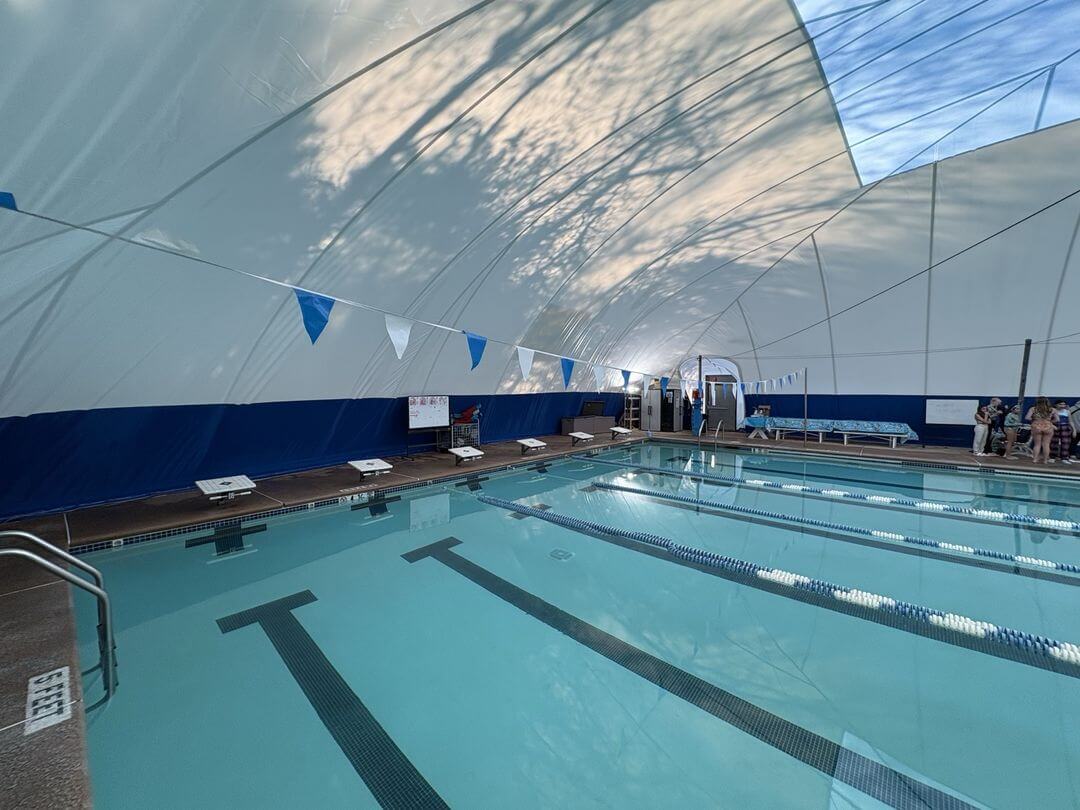
    A pool air dome is an inflatable fabric structure that completely encloses your swimming pool, creating a controlled indoor environment year-round.

    You’ll benefit from constant air pressure that maintains the dome’s shape while providing structural integrity without traditional support beams or frames.

    Your swimming pool air dome operates through continuous air circulation systems that maintain positive internal pressure.

    The specialized fabric withstands chlorine exposure and humidity while the pressurized air keeps the structure inflated.

    Temperature controls maintain ideal conditions between 75-85°F.

    This indoor pool enclosure transforms your outdoor pool into a protected swimming space.

    The natatorium air dome shields against weather elements while dehumidification systems prevent moisture buildup.

    You’ll enjoy extended swimming seasons with reduced maintenance costs and energy efficiency compared to traditional indoor pool construction methods.

    Pool Air Dome Benefits: Year-Round Swimming And Energy Savings

    You’ll transform your pool into a year-round aquatic haven with an air dome that extends your swimming season well beyond traditional outdoor limits.

    Your heating bills will drop considerably as the dome traps warm air and reduces heat loss, creating an insulated environment that maintains comfortable temperatures with less energy.

    You’re also protected from harsh weather conditions like rain, snow, and strong winds that would otherwise force you to close your pool for months at a time.

    Extended Swimming Season Benefits

    When winter temperatures drop and outdoor pools become unusable, an air dome cover transforms your swimming facility into a year-round aquatic haven.

    You’ll extend your swimming season from the typical 3-4 months to a full 12 months of operation, maximizing your pool investment regardless of weather conditions.

    Your pool cover dome creates a controlled environment that maintains ideal water temperatures between 75-85°F, eliminating seasonal shutdowns.

    You won’t need to winterize your pool or deal with expensive reopening procedures each spring.

    The extended season means increased revenue opportunities for commercial facilities and enhanced property value for residential pools.

    Additionally, you’ll protect swimmers from harsh weather elements like wind, rain, and UV exposure while maintaining consistent water quality year-round through the dome’s climate-controlled environment.

    Reduced Heating Costs

    Since air dome covers create an insulated barrier around your pool, you can slash heating costs by up to 70% compared to open-air swimming facilities.

    The dome’s specialized fabric traps warm air inside while blocking cold outdoor temperatures from affecting your pool water. You’ll maintain consistent water temperatures between 75-85°F without constantly running expensive heating systems.

    The enclosed environment eliminates heat loss from wind and evaporation, which typically accounts for most energy waste in outdoor pools. Your heating equipment won’t work overtime fighting against weather conditions, dramatically reducing monthly utility bills.

    During winter months, you’ll see the most significant savings when outdoor temperatures drop substantially. This energy efficiency means your air dome investment pays for itself through reduced operational costs over time.

    Weather Protection Advantages

    Beyond energy savings, air dome covers shield your pool from harsh weather conditions that would otherwise shut down swimming operations.

    You’ll maintain consistent swimming schedules regardless of external conditions, protecting your investment and users from nature’s unpredictability.

    Your air dome provides extensive weather protection through:

    • Wind resistance – Engineered fabric withstands strong gusts without compromising structural integrity
    • Rain and snow deflection – Waterproof membrane keeps precipitation from contaminating pool water
    • UV protection – Specialized materials filter harmful rays while maintaining natural lighting
    • Temperature stability – Insulated environment prevents extreme temperature fluctuations
    • Debris prevention – Sealed structure blocks leaves, dirt, and airborne contaminants

    This weather barrier extends your swimming season year-round, eliminating closures due to storms, cold snaps, or seasonal changes.

    You’ll maximize facility usage while minimizing weather-related maintenance costs.

    Must-Have Features: Dehumidification And Chlorine-Resistant Materials

    Although swimming pool air domes offer excellent year-round protection, they’ll fail without two critical components that address the unique challenges of indoor pool environments.

    First, you need continuous dehumidification systems. Pool water creates constant moisture that’ll cause condensation, mold growth, and structural damage without proper humidity control. Your dehumidification system must run 24/7 to maintain safe moisture levels and prevent your dome from becoming a breeding ground for harmful microorganisms.

    Second, you can’t compromise on chlorine-resistant materials. Standard dome fabrics won’t survive the harsh chemical environment. You need specialized materials engineered to withstand chlorine exposure, preventing deterioration and costly replacements.

    Your hardware must also feature corrosion-resistant coatings.

    These features aren’t optional upgrades—they’re essential investments that determine whether your dome lasts years or fails within months.

    Pool Air Dome Size Requirements For Different Pool Dimensions

    You’ll need to determine the right dome size based on your pool’s specific dimensions to guarantee complete coverage and structural integrity.

    A 25-meter pool typically requires an 82′ x 50′ dome covering 4,100 square feet, but your measurements will vary depending on your pool’s length, width, and surrounding deck space.

    Most manufacturers offer both standard sizing options for common pool dimensions and custom solutions for unique layouts or oversized installations.

    Standard Pool Dimensions

    Pool dimensions directly determine the size and cost of your air dome installation.

    You’ll need to account for adequate clearance beyond your pool’s perimeter to guarantee proper coverage and structural integrity.

    Common residential pool sizes require these air dome dimensions:

    • 25-foot pools: Need 50′ x 82′ coverage (4,100 sq ft)
    • 30-foot pools: Require 60′ x 90′ coverage (5,400 sq ft)
    • Olympic-sized pools: Demand 164′ x 82′ coverage (13,448 sq ft)
    • Lap pools: Typically need 75′ x 25′ coverage (1,875 sq ft)
    • Custom shapes: Require individual measurements plus 10-15′ clearance

    Your dome must extend beyond the pool deck to accommodate entry points, equipment access, and proper anchoring.

    Irregular pool shapes increase complexity and cost since you’ll need custom engineering.

    Always measure your entire pool area, including decking and surrounding features, before selecting dome specifications.

    Coverage Area Calculations

    Calculating your air dome’s coverage area requires precise measurements that extend well beyond your pool’s actual dimensions.

    You’ll need additional space around your pool’s perimeter for safety zones, equipment access, and structural anchoring points.

    For a standard 25-meter pool, you’ll require coverage of approximately 82′ x 50′ (25m x 15.2m), totaling 4,100 square feet.

    This accounts for the pool itself plus necessary clearance zones. The extra width accommodates pool decking, lane rope storage, and maintenance access.

    Don’t underestimate these buffer zones – they’re essential for proper dome installation and daily operations.

    Your coverage calculations should include walkways around the pool perimeter, space for diving boards or starting blocks, and room for poolside equipment.

    Measure twice, as undersized domes create operational headaches and safety concerns.

    Custom Size Solutions

    Since every pool presents unique dimensional challenges, standard air dome sizes rarely provide perfect fits for residential, commercial, or Olympic-scale installations. You’ll need customized solutions that account for your pool’s specific length, width, and surrounding deck space.

    Custom sizing considerations include:

    • Deck overhang requirements – Additional 3-6 feet beyond pool edges for proper anchoring and maintenance access
    • Height specifications – Minimum 8-foot clearance at shallow end, 12+ feet at diving areas
    • Shape accommodations – Kidney, L-shaped, or irregularly contoured pools need specialized pattern cutting
    • Utility integration – Custom placement of air intake, exhaust, and access door locations
    • Foundation modifications – Anchoring systems adapted to existing concrete, pavers, or landscaping

    Professional manufacturers create detailed site plans ensuring your dome maximizes coverage while maintaining structural integrity and operational efficiency.

    Pool Air Dome Installation: Process And Timeline Breakdown

    Three distinct phases define the air dome installation process, each requiring specialized expertise and precise coordination. You’ll work with certified installers who manage foundation preparation, fabric assembly, and system commissioning over several weeks.

    Phase Duration Key Activities
    Site Preparation 3-5 days Foundation anchoring, electrical connections, equipment positioning
    Fabric Installation 2-3 days Dome assembly, inflation testing, seal verification
    System Commissioning 1-2 days HVAC calibration, dehumidification setup, safety checks
    Final Testing 1 day Full system operation, emergency procedures, handover training

    Weather conditions considerably impact your timeline—you’ll need dry conditions during fabric installation. The entire process typically takes 7-11 days, though complex installations may require additional time for custom features or challenging site conditions.

    Pool Air Dome Costs: Equipment, Installation, And Operating Expenses

    Understanding the installation timeline sets the stage for planning your budget—pool air dome investments involve substantial upfront costs plus ongoing operational expenses.

    Equipment costs typically range from $250,000 to $500,000 for a standard 25-meter pool setup. You’ll need specialized chlorine-resistant fabric, continuous dehumidification systems, and corrosion-resistant hardware designed for harsh pool environments.

    Your total investment includes:

    • Initial equipment purchase ($250K-$500K depending on size and features)
    • Professional installation labor (20-30% of equipment cost)
    • Site preparation and foundation work ($15K-$25K)
    • Electrical connections for climate control systems ($8K-$12K)
    • Annual operating expenses including electricity, maintenance, and fabric replacement reserves ($25K-$40K)

    Factor in energy costs for maintaining ideal 75-85°F temperatures year-round when calculating your long-term financial commitment.

    Pool Air Dome Maintenance: Essential Tasks And Schedules

    While your air dome investment protects your pool year-round, it’ll only deliver reliable performance through consistent maintenance. You’ll need to establish regular schedules for critical tasks that keep your dome operating efficiently.

    Maintenance Task Frequency Key Focus Areas
    Fabric Inspection Monthly Tears, wear spots, anchor points
    Blower System Check Weekly Motor function, air pressure levels
    Dehumidification Service Quarterly Filter replacement, system calibration
    Hardware Assessment Bi-annually Corrosion, fasteners, seals

    Your fabric requires gentle cleaning with mild detergents to remove chlorine residue and environmental buildup. Monitor air pressure constantly—low pressure can cause structural stress, while excessive pressure wastes energy. Replace worn components immediately to prevent minor issues from becoming costly repairs that compromise your dome’s integrity.

    How To Choose The Best Pool Air Dome Manufacturer

    Selecting the right manufacturer determines whether your air dome investment delivers decades of reliable service or becomes a source of ongoing headaches.

    You’ll want to evaluate potential partners based on their track record and specialized expertise in pool environments.

    Research manufacturers who demonstrate proven experience with swimming pool domes specifically. Look for companies that understand the unique challenges of chlorinated, humid environments and offer appropriate material solutions.

    Key factors to evaluate include:

    • Experience and portfolio – Review completed pool dome projects and client testimonials
    • Material quality – Verify they use chlorine-resistant, specialized fabrics designed for aquatic facilities
    • Engineering capabilities – Guarantee proper structural calculations for your specific dimensions and climate
    • Support services – Confirm installation training, maintenance programs, and replacement part availability
    • Warranty coverage – Compare terms for fabric, hardware, and structural components