Category: Planning & Operations

Project management, permits, operations, and revenue management.

  • Sportdom als Geschäftsmodell: Hallenvermietung planen und rentabel betreiben

    Sportdom als Geschäftsmodell: Hallenvermietung planen und rentabel betreiben

    Sportdom Geschäftsmodell — nach der Realisierung von Anlagen in der DACH-Region kenne ich die Modelle, die wirklich funktionieren.

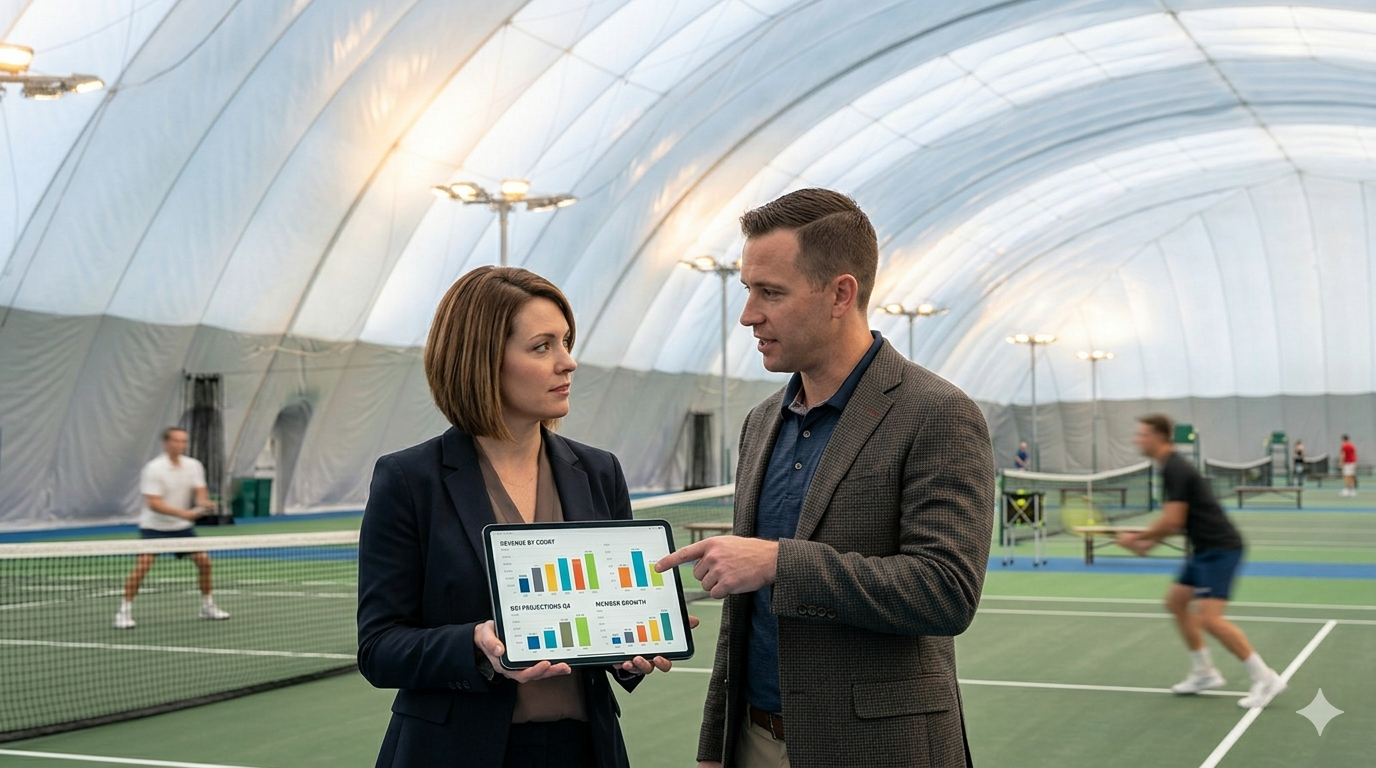
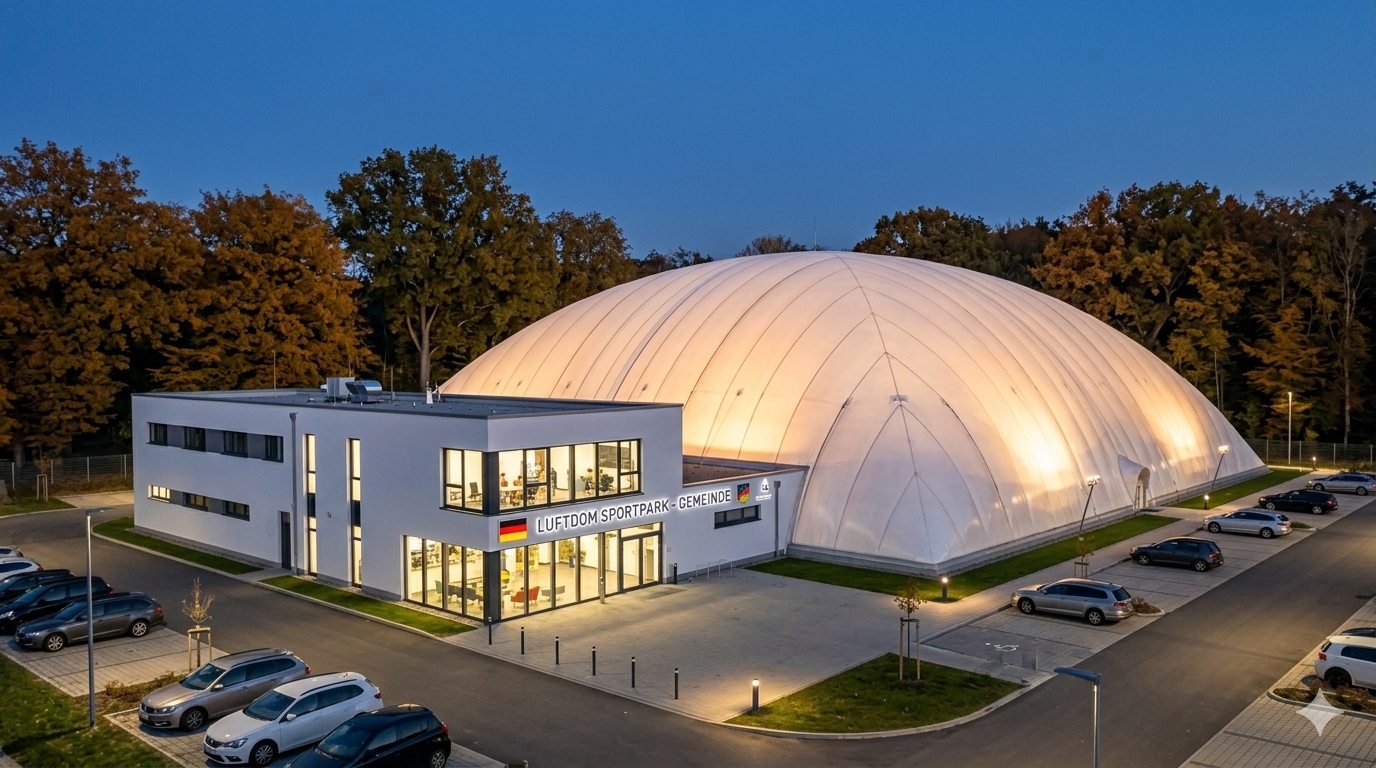
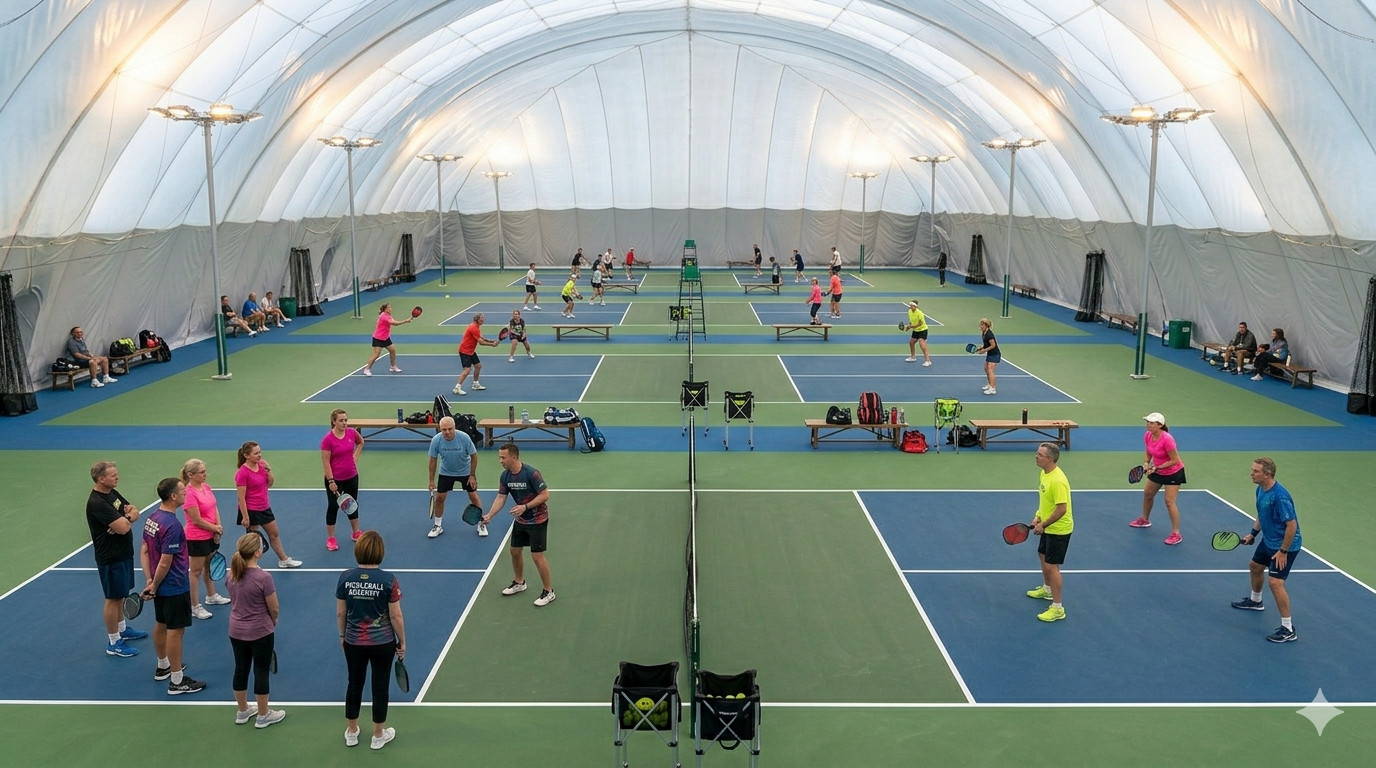
    Ein Luftdom ist mehr als eine überdachte Sportstätte. Richtig betrieben, ist er ein Geschäftsmodell mit vergleichsweise geringem Kapitaleinsatz, kurzen Amortisationszeiten und hoher Flexibilität.


    Das Grundprinzip: Fläche in Buchungsstunden verwandeln

    Jahresumsatz = Buchbare Stunden × Auslastung × Stundensatz


    Welche Sportarten eignen sich für Hallenvermietung?

    SportartStoßzeitenStundensatz (Spitze, DE)
    TennisAbend, Wochenende25–70 €/Court
    Fußball (5-a-side)Abend60–140 €/Platz
    PadelAbend, Wochenende25–60 €/Court
    Volleyball / BasketballAbend50–120 €/Feld
    Leichtathletik-TrainingMorgen, Nachmittag80–200 €/Stunde

    Investitionskosten (schlüsselfertig, ohne Bodenbelag)

    AnlageFlächeSaisonalPermanent
    Tennisblase 2 Courts~1 000 m²100.000–165.000 €160.000–280.000 €
    Tennisdom 4 Courts~2 000 m²185.000–340.000 €300.000–550.000 €
    Mehrzweckdom (Fußball + Courts)~3 500 m²310.000–580.000 €500.000–950.000 €
    Fußballdom 11 gegen 11~9 500 m²850.000–1.600.000 €1.300.000–2.600.000 €

    Betriebskosten pro Jahr (2.000 m², Deutschland)

    KostenpositionJahreskosten
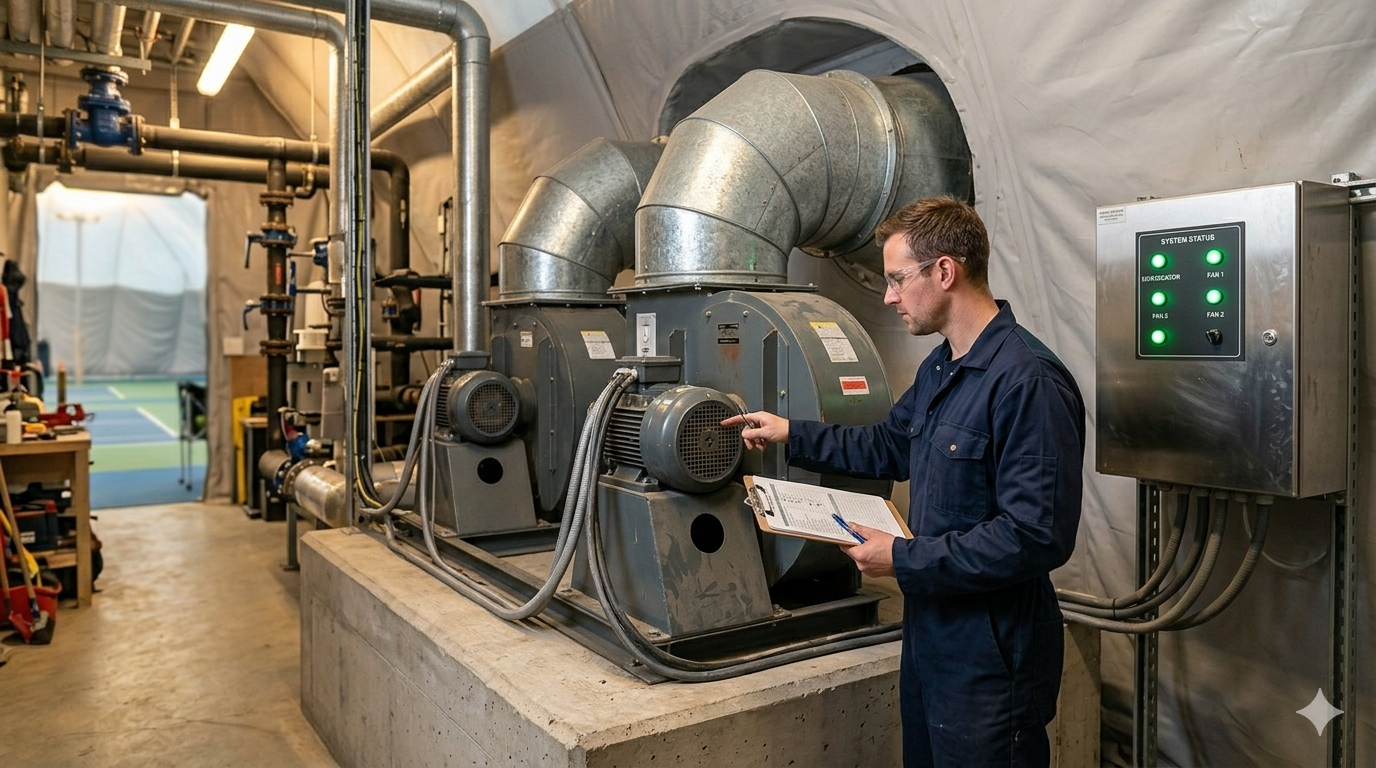
    Energie (Ventilatoren + Heizung + Beleuchtung)22.000–55.000 €
    Wartung und Inspektionen6.000–15.000 €
    Versicherung4.000–12.000 €
    Gesamt (ohne Personal)32.000–82.000 €/Jahr

    Geschäftsmodelle Hallenvermietung

    • Modell 1: Reine Flächenvermietung — Online-Buchungssystem, geringe Personalkosten.
    • Modell 2: Trainings- und Akademieangebote — planbare Wiederholungsumsätze.
    • Modell 3: Ligabetrieb und Turniere — 3- bis 5-fache Einnahmen vs. Standard-Platzvermietung.
    • Modell 4: Mitgliedschaften — wiederkehrender Monatsumsatz.

    Amortisation

    AnlageInvestitionJahresnettogewinnAmortisation
    Tennisblase 2 Courts (saisonal)130.000 €50.000–100.000 €1,5–3 Jahre
    Tennisdom 4 Courts (permanent)420.000 €100.000–250.000 €2–4 Jahre
    Padel 4 Courts (saisonal)260.000 €90.000–180.000 €1,5–3 Jahre
    Mehrzweckdom (permanent)700.000 €130.000–300.000 €3–5 Jahre

    Fördermöglichkeiten

    DOSB / Landessportbünde, KfW-Programme, Bundesförderprogramm Nationale Projekte des Städtebaus, EU-Strukturfonds (EFRE). Ein gut ausgearbeiteter Förderantrag kann 15–35% der Investitionssumme abdecken.


    HeroX AirDomes plant und installiert Luftdome für Sport und Gewerbe in Deutschland, Europa, dem Vereinigten Königreich, den USA und den VAE.
  • Air Dome Annual Running Costs: What Operators Actually Spend

    Air Dome Annual Running Costs: What Operators Actually Spend

    Air Dome Annual Running Costs — after commissioning 50+ domes I can show you exactly what the monthly bill looks like before you commit to anything.

    Annual running costs vary significantly based on dome size, climate, energy specification, and whether the structure operates seasonally or year-round.


    The five categories of annual operating cost

    1. Energy (pressurisation, heating, cooling, lighting)
    2. Maintenance and inspections
    3. Insurance
    4. Seasonal labour (seasonal domes only)
    5. Staff and management

    1. Energy costs

    Energy is typically 50–70% of total annual operating costs.

    Pressurisation (blower energy)

    Dome sizeBlower draw (kW)Annual consumption (kWh)Annual cost (US)Annual cost (UK)
    1,000 m²5–8 kW44,000–70,000 kWh$5,000–$10,000£7,000–£14,000
    2,000 m²9–14 kW79,000–123,000 kWh$9,000–$18,000£13,000–£25,000
    5,000 m²18–28 kW158,000–245,000 kWh$19,000–$35,000£26,000–£49,000
    10,000 m²32–50 kW280,000–438,000 kWh$34,000–$63,000£46,000–£88,000

    Inverter-driven blowers reduce energy consumption by 20–35% versus fixed-speed units.

    Heating

    A 2,000 m² double-skin dome in the UK operating year-round: approximately £18,000–£38,000/year in heating. Upgrading from single-skin to double-skin typically pays back the upgrade cost within 3–6 years in a cold climate.

    Lighting (LED sports, 350–500 lux)

    Dome sizeAnnual cost (US)Annual cost (UK)
    1,000 m²$6,000–$12,000£6,000–£12,000
    2,000 m²$10,000–$22,000£10,000–£22,000
    5,000 m²$22,000–$45,000£22,000–£45,000

    Total energy cost benchmarks (all sources combined)

    ScenarioPer m² per year
    Moderate climate, double-skin£14–£28 / $18–$36
    Cold climate, double-skin£20–£40 / $26–$52
    Cold climate, single-skin£45–£70 / $58–$90

    2. Maintenance and inspections

    Annual maintenance budget benchmarks:

    Dome sizeAnnual maintenance budget
    Under 1,500 m²£3,000–£8,000 / $4,000–$10,000
    1,500–4,000 m²£6,000–£18,000 / $8,000–$22,000
    Over 4,000 m²£14,000–£40,000 / $18,000–$50,000

    Major maintenance events: – Blower replacement (every 15–20 years): £10,000–£40,000 / $12,000–$50,000 – Membrane replacement (year 10+): £40,000–£90,000 / $50,000–$110,000 for a 2,000 m² dome


    3. Insurance

    Annual insurance benchmarks:

    Dome size and typeUK annual premiumUS annual premium
    Small seasonal bubble (1,000 m²)£2,000–£5,000$2,500–$7,000
    Mid-size permanent dome (2,500 m²)£5,000–£14,000$6,500–$18,000
    Large sports complex (7,000 m²+)£12,000–£35,000$15,000–$45,000

    4. Seasonal labour (seasonal domes only)

    Dome sizeAnnual install + removal cycle
    2-court tennis bubble (~1,000 m²)£8,000–£18,000 / $10,000–$22,000
    4-court dome (~2,000 m²)£14,000–£30,000 / $18,000–$38,000
    Large seasonal dome (4,000+ m²)£25,000–£60,000 / $32,000–$75,000

    After 10 years, a seasonal dome will have spent £140,000–£300,000 on installation and removal cycles alone.


    5. Staff and management

    • Fully staffed facility: £40,000–£70,000 / $50,000–$90,000/year.
    • Self-service with online booking: £15,000–£30,000 / $18,000–$38,000/year.

    Total annual cost summary (permanent dome, moderate climate)

    Cost category1,000 m²2,000 m²5,000 m²
    Energy£20,000–£38,000£35,000–£65,000£75,000–£140,000
    Maintenance£4,000–£8,000£7,000–£15,000£16,000–£35,000
    Insurance£3,000–£7,000£5,500–£13,000£12,000–£30,000
    Total (excl. staff)£27,000–£53,000£47,500–£93,000£103,000–£205,000

    How to reduce running costs: five highest-impact actions

    1. Upgrade to double-skin insulation in cold climates.
    2. Install inverter-driven blowers (save 20–35% pressurisation energy).
    3. Fit LED lighting from day one.
    4. Install an energy management system (save 10–20% on energy bills).
    5. Negotiate a fixed-rate commercial energy contract.

    HeroX AirDomes provides detailed running cost modelling as part of the feasibility process for every project.

  • How to Maximise Revenue at an Indoor Sports Dome: The Operator’s Playbook

    How to Maximise Revenue at an Indoor Sports Dome: The Operator’s Playbook

    Maximise indoor dome revenue — I have seen operators double their income by changing three things they had never considered optimising.

    The facilities that generate the best returns are rarely the ones with the biggest domes or the lowest construction costs. They are the ones with the most disciplined approach to programming, pricing, and revenue diversification.


    The fundamental economics

    An indoor sports dome has a fixed cost base regardless of usage. Every unsold peak hour is revenue that cannot be recovered.


    Revenue stream 1: Court and pitch hire

    Rate benchmarks:

    SportPeak rate (US)Off-peak rate (US)Peak rate (UK)Off-peak (UK)
    Tennis (per court/hr)$35–$120$20–$60£18–£100£10–£50
    Pickleball (per court/hr)$25–$90$15–$50£20–£50£12–£30
    Football 5-a-side (per pitch/hr)——£55–£120£30–£70
    Padel (per court/hr)$30–$80$18–$45£30–£65£18–£40

    Key tactics: dynamic pricing (yield management), block bookings (offer 10–15% discounts for 10-week commitments), and booking software (CourtReserve, PlaySight, Club Automation).


    Revenue stream 2: Leagues and competitions

    Leagues are the highest ROI revenue stream for most operators.

    Tournament revenue (4-court tennis open, 64 players):

    Income itemAmount
    Entry fees$4,800
    Food and drink$500–$1,500
    Sponsor logos$500–$2,000
    Total$6,000–$9,100

    vs standard weekend hire: $1,440. Tournament revenue is 4–6× standard hire for the same hours.


    Revenue stream 3: Coaching and academy programmes

    Staff coaching model: charge market rates ($60–$150/hr tennis US; £40–£100/hr UK). Margin per session: 40–65%.

    Franchise / licence model: external coaches pay slightly below rack rate (80–90%). Zero management overhead.

    A 20-week junior tennis academy on 2 courts: – 24 students × $350 = $8,400 total – Net contribution after court costs: $5,400


    Revenue stream 4: Memberships

    Membership typeMonthly feeValue proposition
    Open access (off-peak only)$80–$150Unlimited weekday daytime play
    Priority booking$140–$2507-day advance peak access
    Family membership$200–$3502 adults + children
    Corporate membership$500–$1,5004 named users, invoiced monthly

    Revenue stream 5: Schools and education partnerships

    Block contract with 3 local schools (2 × 2-hour sessions/week): – £28,800 guaranteed income over a 32-week academic year – Uses off-peak slots that would otherwise be empty


    Revenue stream 6: Corporate and events

    A 2-hour corporate pickleball/tennis event for 12 people: – Court hire + equipment + food/drink = $680 total – vs $330 standard hire (50–100% premium for exclusive use)


    Revenue stream 7: Fitness and non-sport programming

    Bootcamp (6am–8am), yoga (mid-morning), HIIT, children’s multi-activity — block-hire to external fitness operators is the simplest model.


    Revenue stream 8: Sponsorship and naming rights

    Perimeter LED panels: £2,000–£10,000/year. Court naming: £5,000–£25,000/year. A mid-size dome can generate £15,000–£50,000/year in sponsorship at maturity.


    Programming sequence: how to build a full facility

    • Months 1–3: Court hire only. Fill peak slots.
    • Months 3–6: Launch leagues. Convert hirers to weekly returners.
    • Months 6–12: Introduce membership.
    • Year 2: Schools, corporate, academies.
    • Year 3+: Dynamic pricing, sponsorship, secondary revenue.

    HeroX AirDomes works with clients throughout the feasibility, design, and post-installation phases to model revenue potential.

  • Sports Dome ROI Analysis: Break-Even, Payback, and Revenue Scenarios (2026)

    Sports Dome ROI Analysis: Break-Even, Payback, and Revenue Scenarios (2026)

    Sports dome ROI analysis — the profitable operators I have worked with all understood the same four financial levers before they broke ground.

    The most important question any prospective dome operator asks is whether the investment will actually pay back. The short answer: yes — for the right facility in the right market with the right programming.


    How to think about dome ROI

    Net annual profit = Total revenue − Operating costs Payback period = Capital cost ÷ Net annual profit


    Revenue benchmarks by sport

    Tennis (per court, per hour)

    MarketPeak rateOff-peak rate
    London / New York£60–£110 / $70–$130£30–£60 / $35–$75
    Regional UK cities£20–£40£12–£22
    US suburban markets$25–$60$15–$35

    Football / Soccer (per pitch, per hour)

    Pitch typePeak rate (UK)Peak rate (US)
    5-a-side£55–£120$60–$140
    11-a-side£120–£280$130–$300

    Pickleball (per court, per hour)

    MarketDrop-in rateCourt hire rate
    US suburban$8–$20 per player$25–$60 per court
    US urban$12–$30 per player$40–$90 per court

    Padel (per court, per hour)

    MarketPeak rateOff-peak rate
    UK£30–£65£18–£40
    Spain / France / Germany€20–€45€12–€28

    Revenue model: 4-court tennis dome (US suburban, year-round)

    • Capital cost: $520,000 | Operating costs: $70,000/year
    • Weekly total revenue: ~$9,870
    • Annual gross: ~$513,000
    • Net annual profit: ~$445,000
    • Payback period: ~14 months (high-utilisation scenario)
    • Conservative scenario (55–60% utilisation): net profit $200,000–$280,000, payback 2–3 years

    Revenue model: soccer dome, 11-a-side (UK, year-round)

    • Capital cost: £1,600,000 | Annual operating costs: £160,000
    • Annual gross: £365,000 | Net profit: £205,000
    • Payback: ~7.8 years (adding tournaments and academies reduces to 5–6 years)

    Revenue model: 4-court pickleball dome (US suburban, seasonal)

    • Capital cost: $380,000 | Annual operating costs: $55,000
    • Total seasonal revenue: ~$280,000 | Net profit: $225,000
    • Payback: ~1.7 years

    Realistic ROI ranges by dome type

    Dome typeCapital costNet annual profit rangePayback range
    2-court seasonal tennis bubble$160,000–$250,000$60,000–$130,0001.5–3.5 yrs
    4-court year-round tennis dome$500,000–$800,000$150,000–$400,0002–5 yrs
    4-court pickleball dome (seasonal)$300,000–$500,000$130,000–$280,0001.5–3 yrs
    Multi-sport dome (5-a-side + courts)$700,000–$1,400,000$150,000–$400,0003–6 yrs
    11-a-side soccer dome (year-round)$1,200,000–$2,500,000$100,000–$300,0005–10 yrs

    What drives the biggest variance in payback period

    1. Utilisation rate — every 10% additional utilisation changes annual net profit by $40,000–$150,000.
    2. Programming vs pure rental — leagues, academies, and tournaments consistently outperform court-hire-only models.
    3. Peak/off-peak ratio — monetising daytime weekday slots dramatically improves unit economics.
    4. Capital cost per m² — cheapest dome is not necessarily best ROI.
    5. Energy cost — specification decisions (skin count, heat pump, LED) have large financial impact.

    Payback period most operators achieve

    • Top quartile (high demand, strong programming, high utilisation): 1.5–3 years
    • Median (good market, moderate programming, 60–70% utilisation): 3–5 years
    • Bottom quartile (weaker market, rental-only): 6–10+ years

    HeroX AirDomes provides detailed ROI modelling as part of the feasibility process for all new projects.

  • The Air Dome Buying Process: From First Call to Installation Day

    The Air Dome Buying Process: From First Call to Installation Day

    Air dome buying process – I have walked clients through these 7 stages over 50 times and the smooth projects all had one thing in common: preparation.

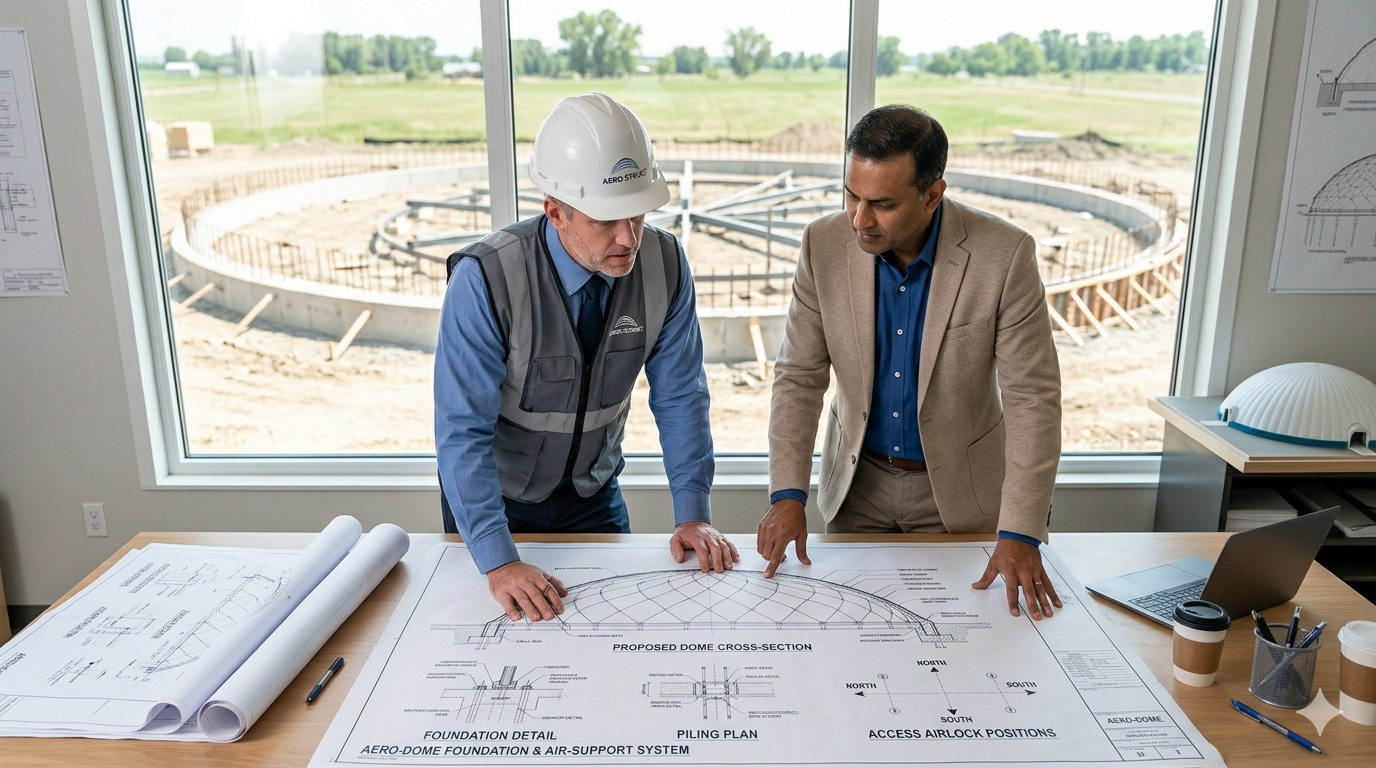
    Buying an air dome is not like ordering equipment from a catalogue. It is a bespoke construction project with engineering, permitting, manufacturing, and civil works components.


    Overview: the seven stages

    StageWhat happensTypical duration
    1. Initial enquiry and briefDefine your requirements1–2 weeks
    2. Feasibility and designSizing, specification, initial cost plan2–4 weeks
    3. Commercial and contractFormal quotation, supplier selection, contract2–6 weeks
    4. PermittingPlanning permission, structural approval4–20 weeks
    5. ManufacturingMembrane fabrication, mechanical components8–16 weeks
    6. Site preparationFoundation, utilities, access2–6 weeks
    7. Installation and commissioningInflation, testing, handover1–3 weeks
    Total from first call to first use5–10 months

    Stage 1: Initial enquiry and brief

    Your brief should include site information, operational requirements (sport, seasonal or permanent, user numbers), commercial context (budget, land tenure, target opening date), and planning context.

    Red flag: any supplier who sends a price within 48 hours without asking about your site, soil conditions, local wind/snow loads, or planning context.


    Stage 2: Feasibility and design

    At this stage the supplier develops structural design brief, mechanical design brief, and lighting design. This produces drawings, specification schedule, and an outline cost plan broken down by element.


    Stage 3: Commercial and contract

    Obtain a minimum of 2–3 quotes. Ensure quotes are comparable on membrane material, foundation type, HVAC specification, lighting, warranty terms, and engineering certification.

    Key contract terms: – Payment schedule: 30–40% deposit, 30–40% on manufacturing completion, balance on installation completion. – Delivery timeline with milestone dates. – Warranty: membrane (minimum 10 years), structure (minimum 5 years), mechanical (minimum 2 years).


    Stage 4: Permitting

    UK: seasonal domes on existing sports facilities may be permitted development. Permanent domes require full planning permission (typically 13–26 weeks).

    US: requirements vary by state and municipality. Many jurisdictions have a streamlined permit for temporary structures. Permanent structures require building permit, zoning approval, ADA compliance.


    Stage 5: Manufacturing (8–16 weeks)

    Process includes detailed structural calculations, CNC membrane fabrication, component manufacture, factory inspection, and shipping (1–2 weeks from Europe; 4–8 weeks from Asia by sea).


    Stage 6: Site preparation (2–6 weeks)

    • Ring beam (permanent dome): typically 2–4 weeks.
    • Ground anchor installation (seasonal dome): typically 3–5 days.
    • Three-phase power supply: allow 4–12 weeks to coordinate with network operator in UK.

    Stage 7: Installation and commissioning

    Typical sequence: delivery and check → airlock assembly and membrane layout → attachment to anchors → blower connection → inflation (4–24 hours) → internal rigging → commissioning checks.

    Handover documentation must include: structural engineer’s completion certificate, blower performance records, lighting commissioning report, HVAC records, emergency procedures, maintenance schedule, spare parts inventory.


    HeroX AirDomes manages the complete process — from initial feasibility through engineering, permitting, manufacturing, and installation.

  • Seasonal vs Permanent Air Dome: What works for Your Facility?

    Seasonal vs Permanent Air Dome: What works for Your Facility?

    Seasonal vs permanent air dome – I have had this exact conversation with hundreds of facility owners and the right answer is rarely obvious.

    Choosing between a seasonal and a permanent air dome is one of the most consequential decisions in any sports facility project. Get it right and you match your capital and operating cost profile to your actual usage pattern. Get it wrong and you either overpay in capital, or lose revenue you could have captured.


    The core difference

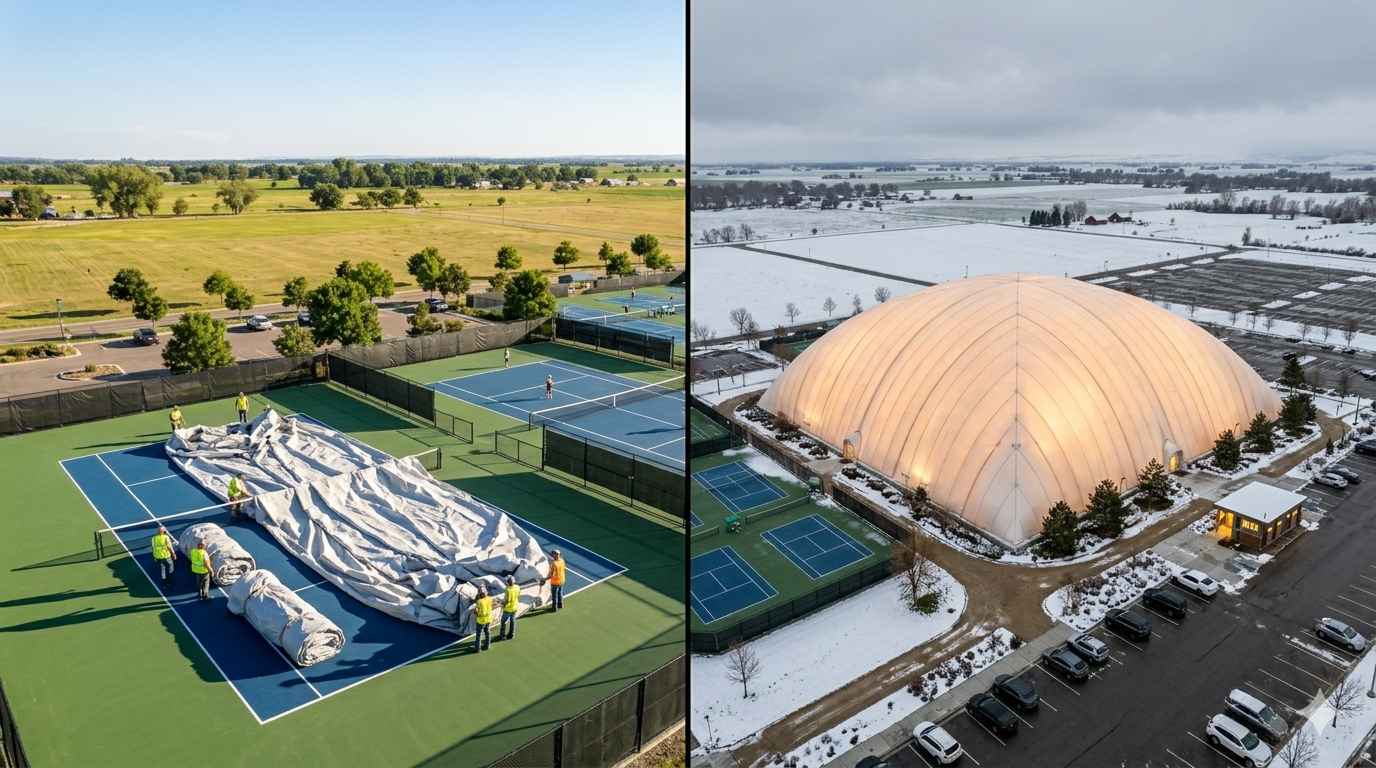
    Seasonal dome: erected in autumn, deflated and removed in spring. The membrane and mechanical equipment are stored during the off-season.

    Permanent dome: installed once and remains in place year-round. Provides 12-month indoor capacity.


    Head-to-head comparison

    FactorSeasonal domePermanent dome
    Capital cost60–75% of equivalent permanent100% baseline
    Annual installation/removal£10,000–£30,000 / $12,000–$38,000None
    FoundationGround anchors or ballastConcrete ring beam (typically)
    Summer incomeOutdoor courts generate revenueFull indoor revenue 12 months
    PlanningOften permitted as temporary structureUsually requires full planning permission
    Membrane lifespan15–25 years12–20 years (same material, more UV)
    Revenue potential5–7 months indoor / 5–7 months outdoor12 months indoor
    Break-even periodTypically 2–4 yearsTypically 4–7 years

    When a seasonal dome is the right choice

    1. You already have high-value outdoor courts or pitches in summer.
    2. Your market is in a temperate climate with defined playing seasons.
    3. Your capital budget is constrained.
    4. Planning permission for a permanent structure is difficult.

    Typical seasonal dome payback period:

    Dome sizeCapital costAnnual dome income (net)Payback
    2-court tennis bubble$150,000–$240,000$55,000–$90,0002–3 years
    4-court tennis / pickleball$320,000–$550,000$100,000–$200,0002–4 years
    Small soccer dome$480,000–$750,000$120,000–$250,0003–5 years

    When a permanent dome is the right choice

    1. Your climate is cold or wet for most of the year.
    2. You want to build a full indoor sports business.
    3. You are covering new courts rather than existing ones.
    4. You have a long lease or own the land outright.
    5. Energy cost management is a priority.

    Typical permanent dome payback period:

    Dome sizeCapital costAnnual dome income (net)Payback
    4-court tennis dome$500,000–$800,000$110,000–$220,0003–6 years
    Multi-sport (5-a-side + courts)$800,000–$1,500,000$180,000–$380,0004–6 years
    Large indoor sports centre$2,000,000–$4,000,000$350,000–$800,0005–8 years

    The total cost of ownership comparison (4-court dome, 20 years)

    Cost elementSeasonal domePermanent dome
    Year 0 capital cost$420,000$600,000
    Annual install/removal (20 years)$280,000 total$0
    Energy costs (20 years)$450,000 total$650,000 total
    Membrane replacement (year 15)$90,000$120,000
    Maintenance (20 years)$160,000 total$180,000 total
    Total 20-year cost$1,400,000$1,550,000
    Approximate revenue (20 yrs)$2,400,000$4,600,000
    Net 20-year position+$1,000,000+$3,050,000

    Decision framework

    QuestionLean seasonal if…Lean permanent if…
    What is your summer outdoor revenue?HighLow or zero
    How many months per year is outdoor sport impractical?4–6 months7+ months
    What is your lease length on the site?Under 15 years15+ years or freehold
    Do you need 12-month revenue certainty?NoYes
    Is planning permission for permanent structure viable?NoYes

    HeroX AirDomes has installed both seasonal and permanent air-supported structures across the US, UK, Europe, and UAE.